
Book ReviewsAugust 20, 2024
Review: Tiny Robots Render People Immortal but Destroy What Makes Us Human
A sweeping novel about a war-torn future explores personhood and identity
Review: Tiny Robots Render People Immortal but Destroy What Makes Us Human
A sweeping novel about a war-torn future explores personhood and identity

Contributors to Scientific American’s September 2024 Issue
Writers, artists, photographers and researchers share the stories behind the stories

Read all the stories you want.

Voting Is Just the Beginning
Your vote matters. But so does your involvement in civic actions
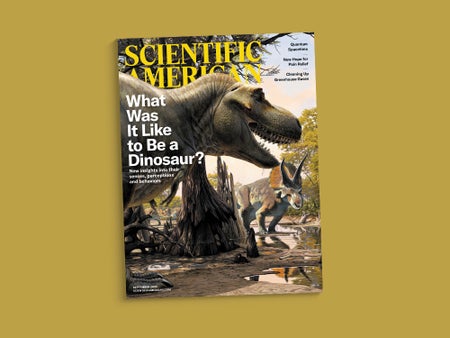
New Insights on Dinosaurs, Pain and Carbon Capture
How we’ll learn more about dark matter, quantum gravity and substitutes for lab animals
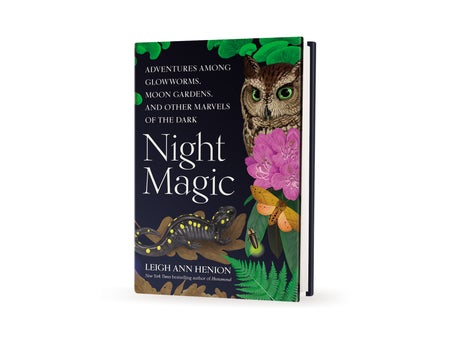
Review: The Secrets of Creatures That Thrive in the Dark
In Night Magic, darkness is revered, and its secrets are revealed
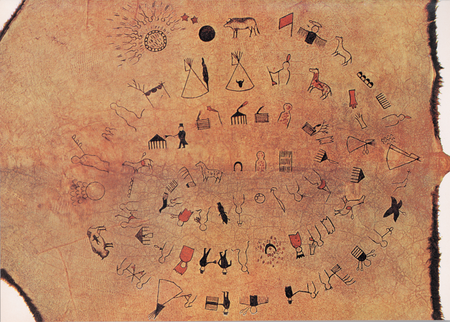
September 2024: Science History from 50, 100 and 150 Years Ago
Mysterious Mercury; spiders predict the weather

Trump’s ‘Gish Gallop’ Debate Tactic Comes from Creationists
A dishonest creationist debating tactic shouldn’t go unchallenged in American life. Or in national politics

Stonehenge’s Strangest Rock Came from 500 Miles Away
A new analysis of Stonehenge’s “Altar Stone” suggests Neolithic people walked or sailed some 500 miles to transport the six-ton boulder

When Should Kids Get a Smartphone?
Teens’ use of smartphones has been blamed for all manner of societal ills. So when should parents take the plunge and equip their kids with these devices?
Extreme Conditions and Ethical Dilemmas: The Archaeology of Human Sacrifice
A mountaintop burial site offers a glimpse into Inka life—but raises ethical questions about unearthing ancient human remains.
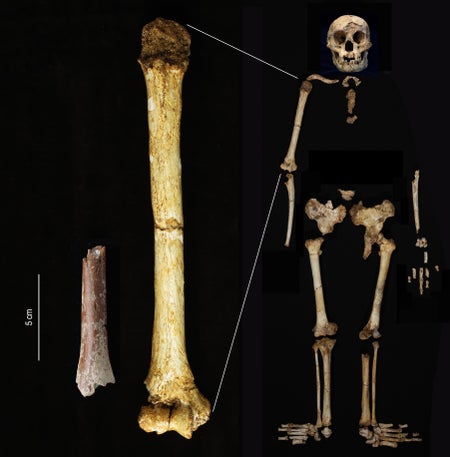
What Does the ‘Hobbit’ Fossil Discovery Teach Us about Our Tiny Human Relatives?
A tiny human relative called the hobbit, or Homo floresiensis, may have evolved from a larger ancestor that shrunk upon arriving on the Indonesian island of Flores, a new fossil suggests
American Science Slips into Dangerous Decline, Experts Warn, while Chinese Research Surges
The U.S. sorely needs a coordinated national research strategy, says Marcia McNutt, president of the U.S. National Academy of Sciences